DR.T.Annapurna
ARSHI SKIN AND HAIR CLINICS
M.B.B.S,DDVL,FRGUHS,MA-PSYCHOLOGY.
Dermatologist,Dermatosurgeon & Aesthetic medicine physician
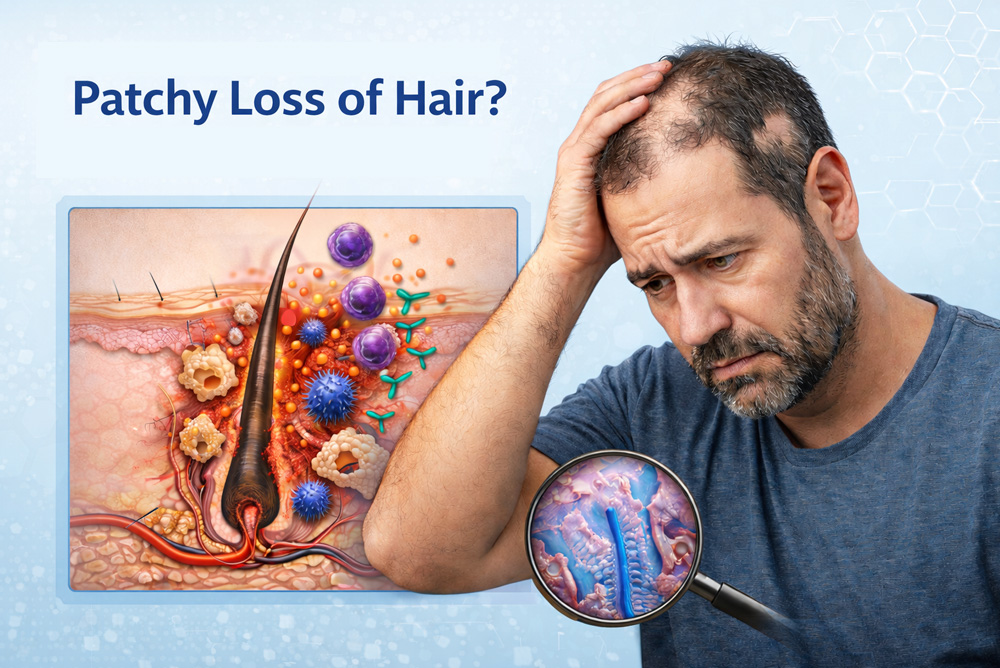
One of the most alarming experiences for any patient is noticing a sudden round bald patch on the scalp. It appears overnight, without pain, without itching — just smooth, hairless skin. Naturally, anxiety follows.
In many such cases, the diagnosis is Alopecia Areata, an autoimmune condition that causes non-scarring hair loss. According to well-established dermatology literature, alopecia areata is a common and unpredictable disorder that can affect both children and adults.
As a dermatologist, I want to simplify what this condition means, why it happens, and how we treat it effectively at Arshi Skin and Hair Clinics.
What Is Alopecia Areata?
Alopecia areata is an autoimmune disease, which means the immune system mistakenly attacks the body’s own tissues — in this case, the hair follicles.
Normally, hair follicles are protected from immune attack by something called immune privilege. In alopecia areata, this protection breaks down.As a result immune cells surround the hair bulb and disrupt the hair growth cycle.
The important point is :
- The hair follicles are not permanently destroyed.
- It is a non-scarring type of hair loss.
- Regrowth is possible.
Who Can Get Alopecia Areata?
It can affect:
- Children
- Teenagers
- Adults
- Men and women equally
It often appears suddenly, even in people with no prior hair problems.
Some patients may have:
- A family history of autoimmune disease
- Thyroid disorders
- Vitiligo
- Atopic dermatitis
Stress may act as a trigger in certain individuals, although it is not the sole cause.
How Does It Present?
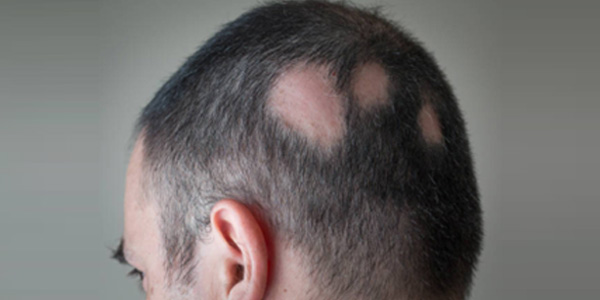
1. Patchy Hair Loss (Most Common)
- Round or oval bald patches
- Smooth scalp surface
- No scarring
2. Alopecia Totalis
- Loss of all scalp hair
3. Alopecia Universalis
- Loss of hair from entire body
4. Diffuse Alopecia Areata
- Sudden thinning across the scalp
- Can mimic telogen effluvium
5. Ophiasis Pattern
- Band-like hair loss around the sides and back of scalp
- More resistant to treatment
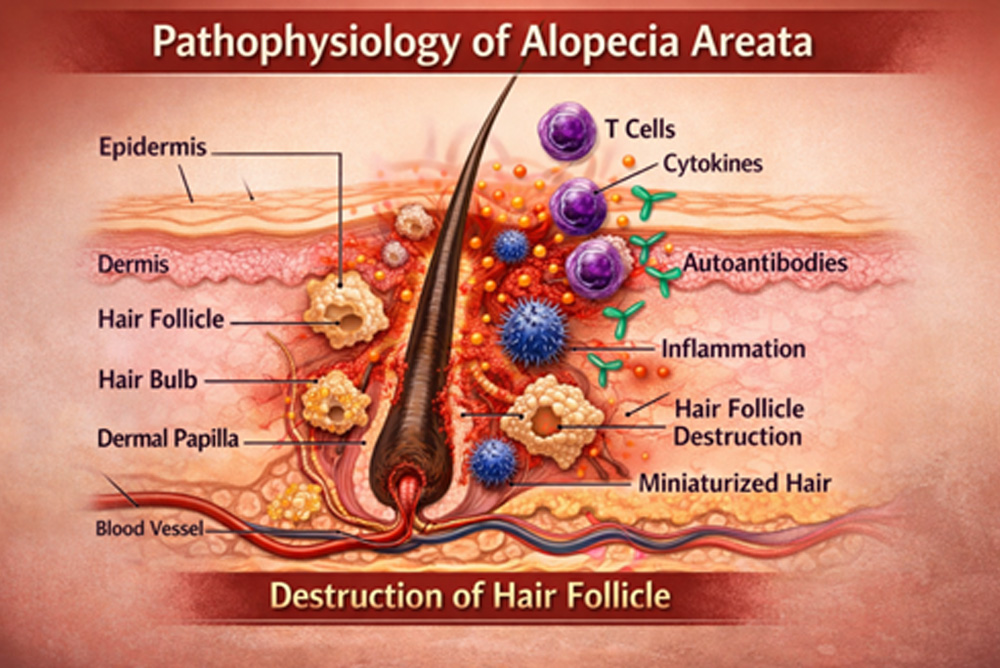
What Happens Inside the Hair Follicle?
According to dermatology research summarized in NCBI clinical literature:
- T-lymphocytes surround the hair bulb
- Inflammatory cytokines such as interferon-gamma are released
- The hair prematurely enters the shedding phase
This explains why hair falls out suddenly. But because the follicle structure remains intact, treatment can restart growth.
Is Alopecia Areata Permanent?
In many cases, hair regrows within months.
However:
- Some patients experience recurrent episodes
- Some may progress to totalis or universalis
- Course is unpredictable
Early treatment improves outcomes.
How Do We Diagnose It?
Diagnosis is usually clinical.
At Arshi Skin and Hair Clinics, evaluation includes:
- Detailed scalp examination
- Dermoscopy (to see exclamation mark hairs)
- Pull test
- Thyroid function tests (if indicated)
- Vitamin D assessment
- Autoimmune screening (in selected cases)
Dermoscopy is particularly helpful in identifying early regrowth signs such as black dots and short vellus hairs.
Treatment Options for Alopecia Areata
Treatment depends on:
- Size of patches
- Duration
- Age of patient
- Extent of involvement
1. Intralesional Steroid Injections
For small patches, corticosteroids are injected directly into the affected area.
- Reduces inflammation
- Suppresses immune attack
- Encourages regrowth
Often considered first-line treatment for limited disease.
2. Topical Corticosteroids
Used in children or those who cannot tolerate injections.
3. Topical Immunotherapy
Used in extensive or recurrent cases to stimulate controlled immune modulation.
4. Oral Medications
In severe or rapidly progressing cases, systemic therapy may be considered.
5. JAK Inhibitors (Recent Advances)
Recent research highlights the role of Janus kinase (JAK) inhibitors in treating moderate to severe alopecia areata.
- Block inflammatory signaling pathways
- Target interferon-mediated immune response
They have shown promising results in clinical trials but require careful monitoring.
6. PRP (Platelet-Rich Plasma)
At Arshi Skin and Hair Clinics, PRP is used as an adjunct therapy in selected patients.
- Delivering growth factors
- Reducing inflammation
- Stimulating follicular regeneration
While not a primary immune treatment, it can support regrowth.
7. Nutritional Optimization
Vitamin D deficiency has been linked in some studies to autoimmune activity.
- Vitamin D
- Iron
- Zinc
- Thyroid imbalance
Correction alone may not cure alopecia areata but supports recovery.
Psychological Impact
Hair loss can significantly affect self-esteem, especially in young individuals.
We provide:
- Counseling
- Treatment education
- Realistic expectations
- Long-term monitoring
Because alopecia areata is not just cosmetic — it affects emotional well-being.
What Is the Prognosis?
Factors associated with better outcome:
- Small patches
- Short duration
- Older age at onset
- No nail involvement
Factors associated with more persistent disease:
- Early childhood onset
- Extensive involvement
- Ophiasis pattern
- Associated autoimmune conditions
But remember — even severe cases can respond to modern therapy.
How Arshi Skin and Hair Clinics Approach Alopecia Areata
Step 1: Detailed Diagnosis
We confirm that it is alopecia areata and not fungal infection or scarring alopecia.
Step 2: Immune Modulation
- Intralesional injections
- Topical therapy
- Systemic options when needed
Step 3: Regenerative Support
- PRP therapy
- Nutritional correction
- Stress management advice
Step 4: Monitoring
- Assessment of regrowth
- Adjustment of treatment
- Prevention of relapse
Common Questions Patients Ask
Is it contagious?
No. It is not infectious.
Did I do something wrong?
No. It is an autoimmune condition, not caused by shampoo or oil.
Will hair grow back white?
Sometimes initial regrowth is lighter, but pigment may return.
Can stress alone cause it?
Stress may trigger it in susceptible individuals but is not the sole cause.
Final Thoughts from a Dermatologist
Alopecia areata can be frightening because it appears suddenly and unpredictably. However, it is important to understand that:
- It is non-scarring.
- Hair follicles remain alive.
- Modern treatments are effective.
With early diagnosis and appropriate therapy, many patients experience significant regrowth.
At Arshi Skin and Hair Clinics, we combine clinical expertise, advanced diagnostics, and personalized care to help patients manage alopecia areata with confidence.
If you notice sudden patchy hair loss, do not panic — seek evaluation early. Timely intervention can make a significant difference.
Hair loss may be visible — but hope for regrowth is real.
