

Is Your Gut Causing Your Skin Problems? A Dermatologist’s Scientific Guide to Gut Health, Dysbiosis & Skin Disorders
-DR.T.ANNAPURNA
M.B.B.S, D.D.V.L, FRGUHS, MA PSYCHOLOGY
DERMATOLOGIST, DERMATO-SURGEON, AESTHETIC MEDICINE PHYSICIAN
ARSHI SKIN AND HAIR CLINICS.
“Doctor, can my gut problems cause acne?”
“Is there a connection between gut health and psoriasis?”
“Do probiotics really help skin?”

These are among the most common health questions asked by my patients in my everyday practice. Increasingly, scientific research supports what dermatologists observed in clinical practice — the gut and skin are deeply interconnected through what is known as the gut–skin axis.
The skin is not just an external organ. It reflects internal immune balance, inflammation levels, hormonal stability, and microbial health. One of the most powerful regulators of systemic inflammation is the gut microbiome.
What Is Gut Health?
The human gut contains trillions of microorganisms including bacteria, fungi, and viruses. Together, they form the gut microbiota. A healthy microbiome:
- Maintains immune balance
- Produces short-chain fatty acids (SCFAs)
- Regulates inflammation
- Strengthens the intestinal barrier
- Supports nutrient absorption
When this balance is disrupted, the condition is called dysbiosis.
What Is Dysbiosis?
Dysbiosis refers to:
- Reduced microbial diversity
- Overgrowth of harmful bacteria
- Depletion of beneficial strains
- Increased intestinal permeability (“leaky gut”)
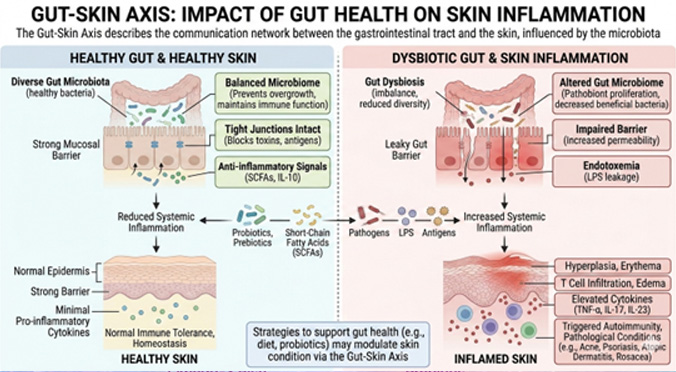
When the gut barrier becomes compromised, endotoxins such as lipopolysaccharides (LPS) can enter systemic circulation, triggering chronic low-grade inflammation — a key driver of many skin disorders.
The Gut–Skin Axis
The gut and skin communicate via immune pathways, cytokines, hormones, and microbial metabolites. Dysbiosis can lead to:
- Increased inflammatory mediators
- Activation of TNF-alpha, IL-6, and IL-17 pathways
- Enhanced oxidative stress
- Worsening of inflammatory skin diseases
This explains why patients with chronic gut disturbances often present with acne, eczema, psoriasis, and rosacea.
Skin Diseases Linked to Gut Dysbiosis
Acne Vulgaris:
Studies suggest altered gut flora in acne patients. Increased systemic inflammation, insulin resistance, and IGF-1 activation contribute to sebum overproduction and inflammatory lesions.
Atopic Dermatitis:
Patients often show reduced Bifidobacterium and lower microbial diversity. Early-life probiotic supplementation has shown reduction in eczema severity in some high-risk populations.
Psoriasis:
Research shows altered Firmicutes/Bacteroidetes ratio and reduced Faecalibacterium prausnitzii, an anti-inflammatory SCFA-producing bacterium. Gut permeability may influence Th17-mediated immune activation.
Rosacea:
Associated with small intestinal bacterial overgrowth (SIBO) and Helicobacter pylori infection. Treatment of SIBO has demonstrated improvement in certain rosacea patients.
Emerging evidence also suggests dysbiosis may influence autoimmune conditions such as lichen planus and vitiligo through immune modulation.
Common Beneficial Strains for Skin Health
Lactobacillus rhamnosus:
Supports barrier function and reduces inflammatory cytokines.
Lactobacillus plantarum:
Improves antioxidant activity and enhances skin hydration.
Bifidobacterium longum:
Reduces skin sensitivity and regulates immune response.
Faecalibacterium prausnitzii:
Produces butyrate, a powerful anti-inflammatory short-chain fatty acid.
Harmful or Overrepresented Strains in Dysbiosis
- Clostridium species
- Pathogenic Escherichia coli
- Proteobacteria overgrowth
- Reduced SCFA-producing bacteria
Balance — not elimination — is the goal of therapy.
Evidence-Based Treatment Interventions
Probiotic Supplementation:
Strain-specific probiotics have demonstrated benefits in acne, eczema, and inflammatory conditions. Multi-strain formulations may support microbiome diversity.
Prebiotics and Dietary Fiber:
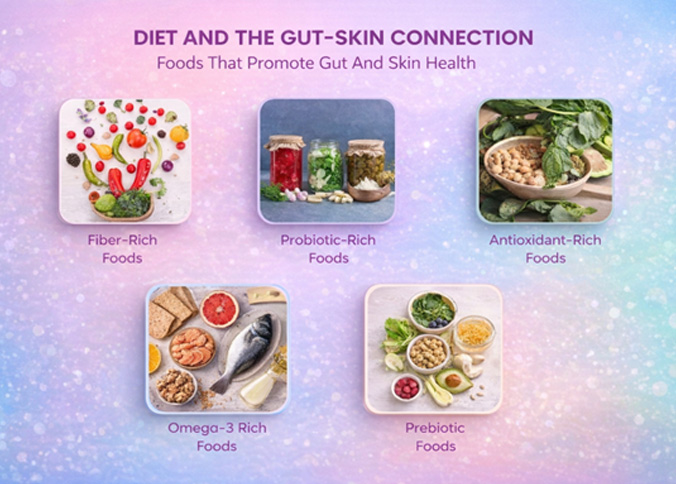
Prebiotics such as inulin and resistant starch feed beneficial bacteria and increase SCFA production.
Dietary Modification:
Low glycemic diets improve acne. Anti-inflammatory diets containing fatty fish, leafy greens, berries, olive oil, nuts, fermented foods, and spices like turmeric. benefit various skin conditions. Many studies repeatedly showed increased omega-3 intake has reduced systemic inflammation.
Avoiding Unnecessary Antibiotics:
Excessive antibiotic use disrupts microbiota balance and may worsen long-term inflammatory risk.
Nutritional Support
Certain nutrients improve gut barrier integrity and immune balance:
- Zinc
- Vitamin D
- Omega-3 fatty acids
- Polyphenols
- Antioxidants
Correcting deficiencies is essential for sustainable skin improvement.
Clinical Approach at Arshi Skin and Hair Clinics
At Arshi Skin and Hair Clinics, we integrate dermatology with internal health optimization.
Our approach includes:
- Detailed history of gut symptoms
- Evaluation of stress and lifestyle factors
- Laboratory investigations (Vitamin D, Zinc, Ferritin, Thyroid profile)
- Personalized probiotic and nutritional protocols
- Evidence-based dermatological treatments such as biologics, or medical therapy when indicated .
Gut correction complements but do not replace standard dermatological care.
What Patients Should Know
Microbiome modulation is a gradual process. Visible skin improvement may take:
- 4–8 weeks for microbial shifts
- 3 months for sustained clinical change
Consistency and holistic care are essential.
Final Thoughts
The gut–skin axis is increasingly supported by scientific research. Dysbiosis contributes to acne, eczema, psoriasis, rosacea, and other inflammatory conditions. However, gut health is one piece of a larger puzzle that includes genetics, hormones, environment, and skincare practices.
At Arshi Skin and Hair Clinics, we combine advanced dermatology with microbiome science to create personalized treatment plans. Because healthy skin does not begin on the surface — it begins within.
